When your air conditioner breaks down, the first question is usually whether to fix it or replace it. There is no single answer for every home. A repair is often the right choice for a newer system with a simple problem. For an older system that keeps failing, putting more money into it may not make sense.
This guide walks through the factors that matter most for Maui homeowners, so you can make the call with confidence.
Factor 1: How Old Is Your System?
Age is one of the clearest indicators. Many central AC systems last roughly 12 to 15 years with good maintenance, though lifespan varies by equipment and use. On Maui, systems that run every day, sit in dusty areas, or face salt air in places like Kahului and Wailuku may wear out sooner.
General guideline:
- Under 10 years old: repair is usually the better option, especially if the system has been maintained.
- 10 to 15 years old: weigh the cost of the repair against the system’s condition and repair history.
- Over 15 years old: replacement often makes more sense, particularly if a major component has failed.
Factor 2: The Cost of the Repair
A common rule of thumb is to compare the repair cost to the cost of a new system. If a repair costs a large share of replacement, often around half or more, replacement deserves serious consideration, especially on an older unit.
Some repairs are minor and clearly worth doing, such as replacing a capacitor, contactor, or clearing a drain line. Others are major: a failed compressor or a leaking evaporator coil on an aging system can cost enough that the money is better spent on new equipment.
Factor 3: How Often Is It Breaking Down?
One repair does not mean a system is failing. Several repairs over a year or two is a different story. If you are calling for service repeatedly, the system is likely reaching the end of its useful life, and those repair costs add up.
Factor 4: What Refrigerant Does It Use?
Older systems often use R-22 refrigerant, which is no longer produced in the United States. Remaining supply is limited and expensive. If an R-22 system develops a significant leak or needs a major repair, replacement is often the more practical choice. Newer systems use refrigerants that are readily available.
Factor 5: Energy Efficiency and Your Electric Bill
Hawaii has some of the highest electricity rates in the country. Older air conditioners are typically far less efficient than current equipment, which is now rated using the SEER2 standard. Replacing an older system can noticeably reduce cooling costs, particularly in homes where the AC runs most of the day.
If your electric bills have been climbing even though your usage has not changed, declining efficiency may be part of the reason. It is also worth checking current Hawaii Energy programs, which have offered incentives on qualifying high-efficiency equipment. Offers change, so confirm what is available before you buy.
Factor 6: Parts Availability on Maui
This is a factor that mainland homeowners rarely think about. Proprietary parts, especially control boards and motors, are rarely stocked on the island. For an older or less common system, a replacement part may need to be shipped, and in some cases parts for discontinued models are hard to find at all. If you are facing a long wait for a part on an aging system, it may be the right time to replace.
Factor 7: Comfort Problems
Sometimes the system still runs but does not keep the home comfortable. Uneven temperatures between rooms, high indoor humidity, or a unit that runs nonstop can point to an aging system or one that was not sized correctly. A properly sized new system, selected using a load calculation for your home, can solve problems that repairs cannot.
Choosing the Right Replacement
If replacement is the right call, the next step is choosing the right system for your home.
Ducted systems are the most popular choice for Maui homes. They cool the whole house evenly through existing or new ductwork.
Ductless mini-splits work well for condos and home additions, where running ductwork is impractical.
Heat pumps are worth considering in upcountry areas such as Kula, Haiku, Makawao, and Pukalani, where cooler evenings can make heating useful. Most homeowners elsewhere on the island choose AC only.
Proper installation matters as much as the equipment. An oversized system will cycle on and off too often and leave the home humid, while an undersized system will struggle on hot days. A professional assessment makes sure the system fits your home and how you use it.
How We Help You Decide
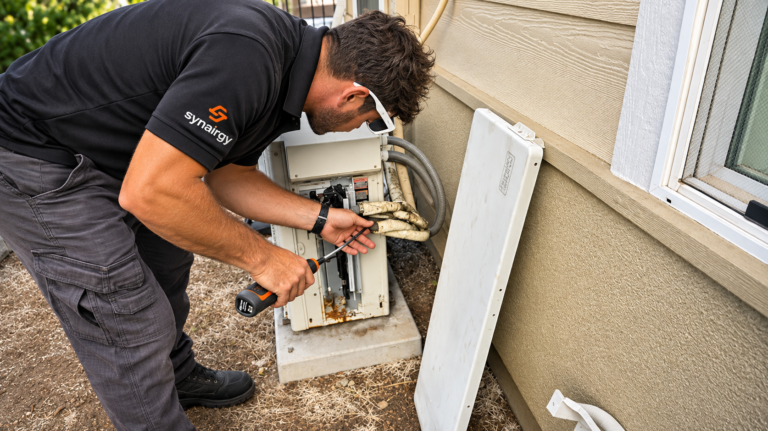
At Synairgy, we start with a diagnostic so you know exactly what is wrong. If the repair makes sense, we will tell you. If the system is near the end of its life, we will explain why and walk you through replacement options. Free estimates are available for new installations, so you can compare the cost of replacement against the repair before deciding.
Synairgy Mechanical has installed and serviced air conditioning on Maui since 1992. We understand island conditions, parts logistics, and the systems that perform best here.
Unsure whether to repair or replace? Schedule a Diagnostic or Get a Free Installation Estimate.
CTA Button: Call us today.
Frequently Asked Questions
How do I know if I should repair or replace my AC?
Consider the system’s age, the repair cost compared to replacement, how often it breaks down, the refrigerant it uses, and your energy bills. Older systems with major failures are usually better candidates for replacement.
How long does an air conditioner last on Maui?
Many systems last around 12 to 15 years with regular maintenance. Daily use, dust, and salt air in some areas can shorten that lifespan.
Is it worth repairing an AC that uses R-22?
For minor repairs, sometimes. For major leaks or component failures, replacement is usually more practical because R-22 is no longer produced in the US and remaining supply is costly.
Do you offer free estimates for AC installation on Maui?
Yes. Free estimates are available for new installations. Repairs start with a diagnostic so we can identify the actual problem first.
Which type of AC system is best for a Maui home?
Ducted systems are the most popular for whole-home cooling. Ductless mini-splits suit condos and additions, and heat pumps are mainly worth considering in upcountry areas.