Kihei is one of the sunniest and warmest parts of Maui. That makes air conditioning essential for homes, condos, and vacation rentals, and it also means systems here work harder and longer than in many other areas of the island. When a Kihei AC system fails, it is rarely random. The same handful of problems show up again and again.
Below are the issues our technicians see most often on Kihei service calls, what causes them, and what you can do to reduce the chances of a breakdown.
1. Clogged Condensate Drain Lines
This is one of the most common calls we get. Your AC removes moisture from the air, and that water drains away through a condensate line. Over time, the line can fill with sludge, algae, and microbial growth until water backs up.
Signs to watch for: water around the indoor unit, water stains on a ceiling below an air handler, a musty smell, or a system that shuts off on its own. Many systems have a float switch that turns the AC off when the drain pan fills, which protects your home from water damage but leaves you without cooling.
How it is fixed: A technician clears and flushes the drain line, checks the pan and float switch, and confirms water is draining freely. Regular drain flushing during maintenance is the best prevention.
2. Dirty Filters and Coils
South Maui is dry and dusty, and that dust ends up in your system. Indoor filters clog faster than many people expect, and outdoor condenser coils collect dust and debris that block airflow.
Signs to watch for: weak airflow, rooms that never quite cool down, higher electric bills, and a system that runs almost constantly.
How it is fixed: replacing the filter and cleaning the coils restores airflow and heat transfer. In severe cases, a restricted coil can lead to a frozen evaporator, which needs to thaw before the system works properly again.
3. Failed Capacitors and Contactors
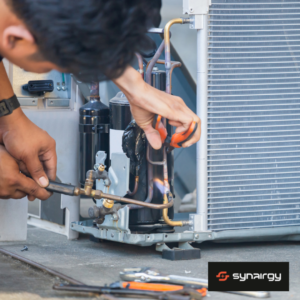
Capacitors help start the compressor and fan motors. Heat and long run times wear them down, and they are one of the most frequently failed parts we replace.
Signs to watch for: the outdoor unit hums but does not start, the fan does not spin, or the system tries to start and stops.
How it is fixed: a technician tests the component and replaces it. This is usually a straightforward repair, but ignoring a failing capacitor can put extra strain on the compressor and motors.
4. Refrigerant Leaks
Refrigerant does not get used up. If the level is low, there is a leak somewhere in the system.
Signs to watch for: warm air from vents, ice on the refrigerant lines or indoor coil, a hissing sound, or a system that runs constantly without reaching the set temperature.
How it is fixed: the right approach is to find and repair the leak, not just add more refrigerant. Topping off a leaking system only delays the problem. For older systems that use R-22, a refrigerant that is no longer produced in the US, a significant leak often leads to a conversation about replacement.
5. Thermostat and Control Issues
Sometimes the AC is fine, but the controls are not. Dead thermostat batteries, incorrect settings, loose wiring, or a failing control board can all stop a system from running.
Signs to watch for: the system does not respond to the thermostat, runs when it should not, or shows error codes.
How it is fixed: a technician tests the thermostat and control circuit to find the cause. If a control board has failed, keep in mind that proprietary boards and motors are rarely stocked on the island, so the repair may involve shipping time for the part.
Condo Specific Challenges in Kihei
Kihei has a large number of condos, and condo HVAC repair comes with its own considerations.
Ductless systems are common. Many condo units and additions use ductless mini-split systems. These have their own drain lines, filters, and indoor coils that need regular cleaning to avoid airflow and drainage problems.
AOAO rules affect the work. Your Association of Apartment Owners may have rules about where outdoor equipment can be placed, when contractors can work, and how equipment is replaced. It helps to check with your AOAO or property manager before major repairs or replacements.
Vacation rentals see heavy use. Units with frequent guest turnover often run around the clock, with thermostats set very low. That extra run time wears components faster. Rental owners benefit from more frequent maintenance visits between guest stays.
How We Approach AC Repair in Kihei
Synairgy uses a diagnostic-first approach. A technician inspects the system, identifies the actual cause of the problem, and explains your options before any work begins. That way, you pay to fix the problem, not to guess.
If your system is older and repairs are adding up, we will tell you that too, so you can decide whether a repair or a replacement makes more sense.
How to Prevent Most of These Problems
Most of the issues above are either prevented or caught early by regular maintenance. We recommend professional service at least twice a year for Kihei systems, and more often for vacation rentals and property-managed units. Between visits, check your filter monthly and keep the area around the outdoor unit clear.
AC not keeping up? Schedule a Diagnostic with our team.
CTA Button: Call us today.
Frequently Asked Questions
What is the most common AC problem in Kihei?
Clogged condensate drain lines and dirty filters or coils are among the most frequent. Dust, humidity, and heavy daily use all contribute.
Why is my AC leaking water inside?
Most often, the condensate drain line is clogged, causing water to back up into the drain pan. A technician can clear the line and check the float switch.
Can you repair ductless mini splits in Kihei condos?
Yes. Ductless systems are common in Kihei condos and additions, and we service and repair them, including drain lines, coils, and controls.
Why does my AC repair sometimes take longer on Maui?
Some parts, especially proprietary control boards and motors, are rarely stocked on the island and need to be shipped. Common parts like capacitors are usually available faster.
How often should a Kihei vacation rental AC be serviced?
At least twice a year, and often more. Rental systems run longer hours, so more frequent maintenance helps prevent breakdowns during guest stays.